
The Top 5 Global Environmental Threats and Their Impact on Essential Life Resources (With Practical Solutions)
Introduction
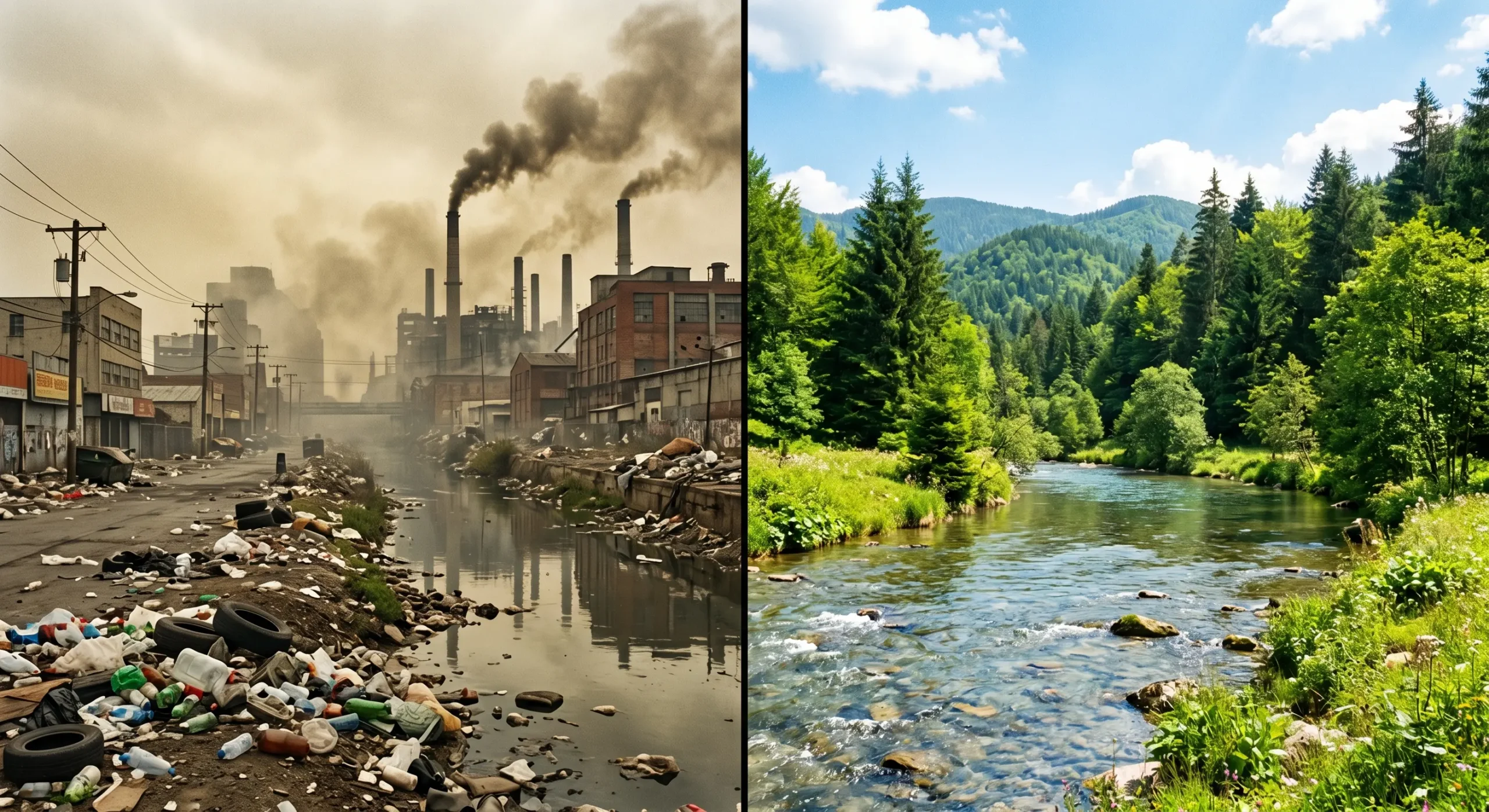
Have you ever imagined that the water we drink and the air we breathe could become seriously threatened within just a few years? In reality, this is not a distant scenario. Rather, it is already happening. Today, our planet faces unprecedented environmental challenges, and as a result, the essential resources that sustain life are under increasing pressure.
1. Climate Change and Its Impact on Water and Food
To begin with, climate change stands as one of the most critical environmental threats worldwide. It not only raises global temperatures but also accelerates ice melting and intensifies extreme weather events.
Impact:
- Fresh water supplies are shrinking primarily because of prolonged droughts
- Agricultural productivity is declining; consequently, food availability is affected
- Ultimately, global food security becomes increasingly unstable
Solutions:
- To address this challenge, shifting to renewable energy is essential
- In addition to that, reducing fossil fuel consumption can significantly lower emissions
- Sustainable farming methods should be adopted; in doing so, ecosystems can recover
“Climate change is no longer a future threat—it is our present reality.”
2. Deforestation and Loss of Biodiversity
Moving forward, deforestation continues to disrupt ecosystems at an alarming rate. As a consequence, biodiversity is rapidly declining, which weakens environmental balance.
Impact:
- Air quality worsens due to the fact that fewer trees are available to absorb carbon dioxide
- Natural food chains are affected; therefore, many species struggle to survive
- Soil fertility decreases over time, which in turn impacts agriculture
Solutions:
- Reforestation initiatives are necessary; in other words, planting trees must become a priority
- Governments should enforce stricter regulations; otherwise, illegal logging will persist
- Consumers can support sustainable products, thereby reducing environmental harm
“Every tree cut down is a loss of an entire unseen ecosystem.”
3. Water Pollution and Its Impact on Health and Life
At the same time, water pollution remains a major global concern. It affects not only ecosystems but also human health in serious ways.
Impact:
- Contaminated water leads to disease outbreaks; for this reason, public health is at risk
- Marine ecosystems suffer greatly; likewise, biodiversity declines
- Clean water becomes less accessible; as a result, communities face shortages
Solutions:
- Wastewater treatment systems must be improved; otherwise, pollution levels will continue rising
- Plastic usage should be reduced; more specifically, single-use plastics must be limited
- Industrial waste must be monitored closely, thus ensuring safer water resources
“Clean water is not a luxury—it is a fundamental human right.”
4. Air Pollution and Its Effect on Public Health
In a similar vein, air pollution poses a serious threat to global health. It is often invisible; however, its effects are severe and long-lasting.
Impact:
- Respiratory diseases are increasing; in fact,
The Top 5 Global Environmental Threats and Their Impact millions are affected each year
- Premature deaths rise significantly; as a consequence, life expectancy declines
- Overall quality of life decreases, especially in urban areas
Solutions:
- Clean transportation should be promoted; for example, electric vehicles
- Industrial emissions must be reduced; otherwise, pollution levels will remain high
- Green spaces should be expanded, which helps improve air quality naturally
“The air we cannot see may be the greatest threat to our lives.”
5. Plastic Waste and the Destruction of Ecosystems
Finally, plastic pollution represents one of the most visible environmental challenges today. Even worse, its effects are long-lasting and difficult to reverse.
Impact:
- Oceans are heavily polluted; as a result, marine life is endangered
- Animals ingest plastic; therefore, many do not survive
- Toxic substances enter the food chain, which ultimately affects humans
Solutions:
- Recycling should be encouraged; at the same time, waste reduction must be prioritized
- Single-use plastics must be minimized; otherwise, the problem will escalate
- Eco-friendly alternatives should be adopted, thereby supporting sustainability
“Every piece of plastic we discard may return to harm us in unexpected ways.”
Conclusion
To sum up, environmental protection is no longer optional; rather, it is essential for survival. Indeed, these global threats are interconnected, which means that solving one can positively impact others. Therefore, by taking small yet meaningful steps, individuals and societies can drive real change. In the end, the future of our planet depends on what we choose to do today.